Safe tree removal in Mauldin, SC, is less about brute force and more about reading a tree correctly before the first cut ever happens. A storm-leaned oak over your roofline, a hollow trunk near the driveway, a dead pine crowding power lines — each one demands a different plan, not just a bigger saw. Here's what actually separates a clean, safe removal from a job that turns into an insurance claim.
Why "Safe" Isn't Just a Marketing Word Here
Tree work has a fatality rate that regulators themselves flag as extreme. Federal safety researchers have noted that the tree care industry's fatality rate is estimated at 1 in 1,000 tree trimmers, nearly 30 times higher than the national average for all workers . That data point is a major reason tree trimming and pruning rank among the most hazardous occupations in the country .
For a Mauldin homeowner standing in the yard with a borrowed chainsaw, that statistic isn't background noise. It's the difference between a crew trained to read tension in a leaning trunk and someone guessing at which way 2,000 pounds of wood is about to fall. A dense, tight-lot community like Mauldin raises the stakes further, since many trees sit close enough to a house, fence, or neighbor's yard that a misjudged drop zone turns into property damage fast.
Signs a Tree in Mauldin Needs to Come Down
Not every problem tree needs full removal. But certain conditions are reliable red flags that pruning alone won't fix.
| Warning Sign | What It Usually Means |
|---|---|
| Large dead limbs or a bare crown | Internal decay or root failure, higher drop risk |
| Deep vertical cracks or split bark | Structural weakness that worsens with wind load |
| Mushrooms or fungus at the base | Root rot, often invisible from above ground |
| Sudden lean after a storm | Possible root-ball lift, can fail without warning |
| Trunk or canopy touching power lines | Electrocution and fire hazard, requires utility coordination |
If your tree shows one or two of these signs but otherwise looks healthy, a licensed arborist can often save it with corrective pruning instead of removal. Our tree trimming service and dead tree removal service both start with that same on-site judgment call.
Residential vs. Commercial Removal Planning
Planning shifts depending on the property. Residential jobs usually focus on protecting the house, driveway, fences, and landscaping within the fall zone. Commercial sites add traffic flow, parking, and customer access to the list of things that can't stop moving while a crew works.
Either way, the plan starts with the same question: what's within reach of this tree if something goes wrong?
How Professional Crews Keep Your Property Safe
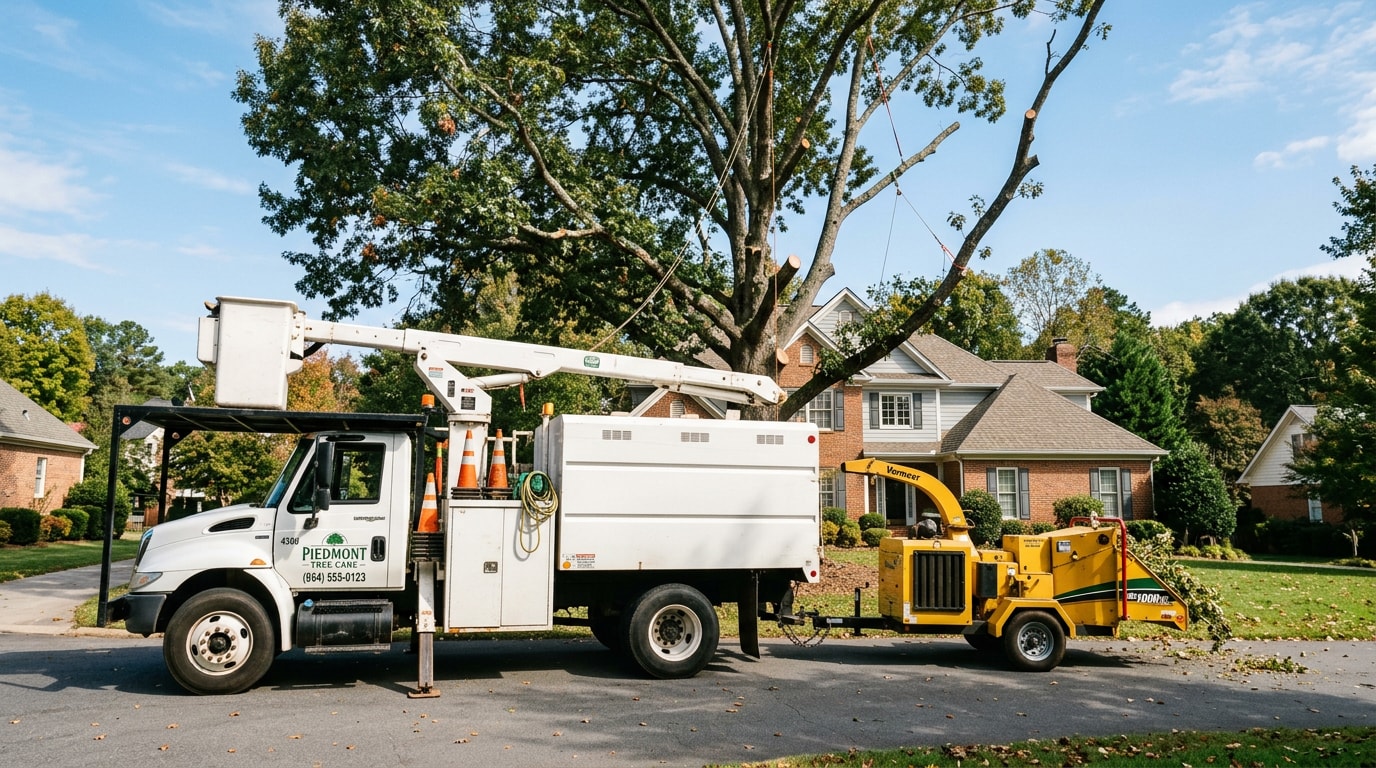
A trained crew maps the job before touching a saw. That means identifying structures, power lines, septic lines, gardens, and the exact path equipment needs to reach the tree.
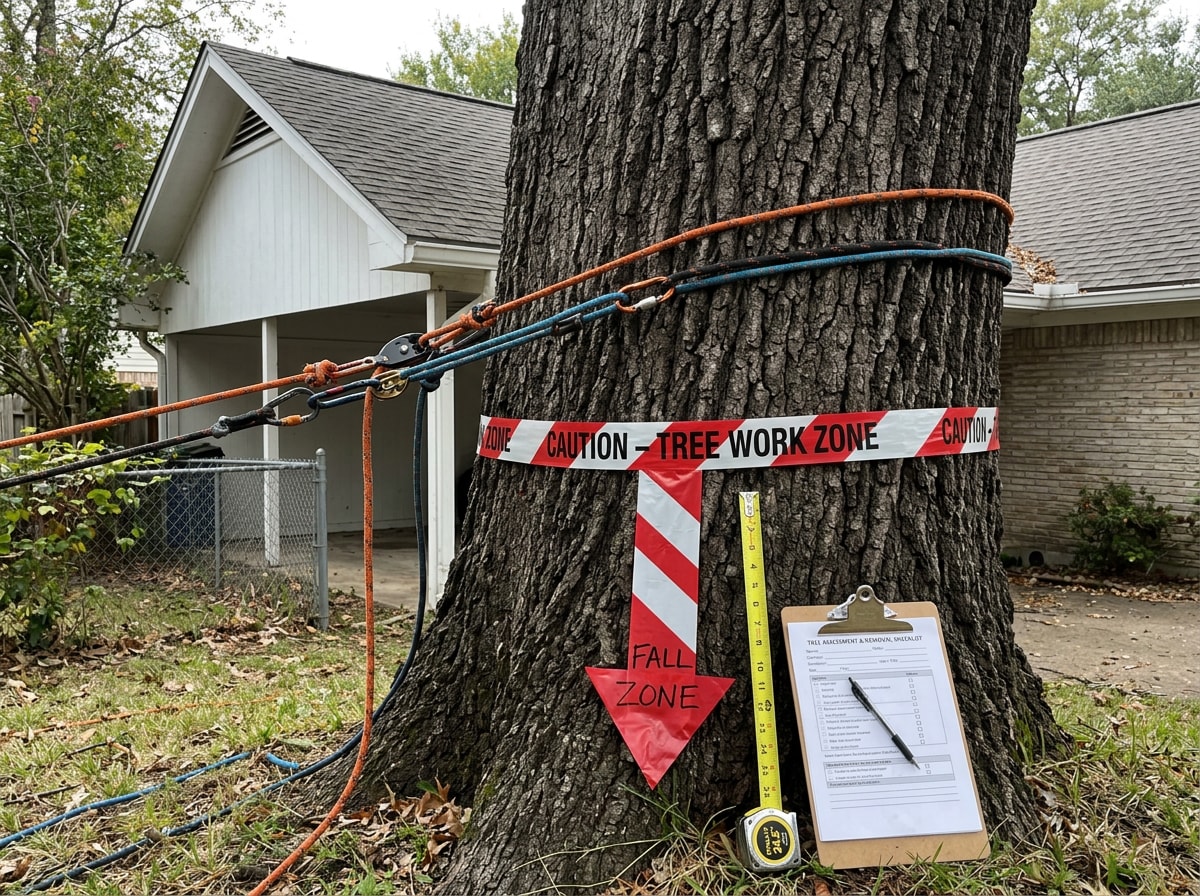
From there, two techniques do most of the work:
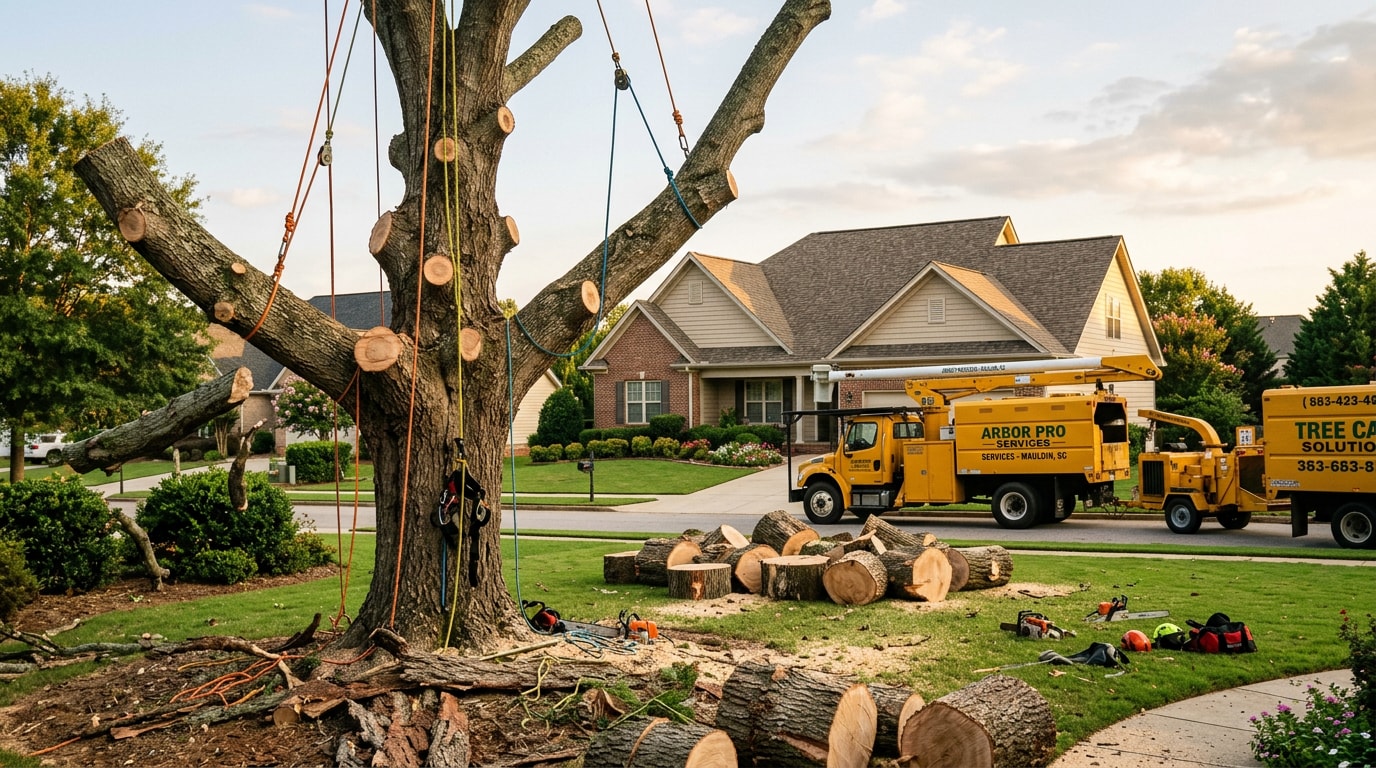
- Sectional removal – taking the tree down piece by piece from the top, used when space is tight or a structure sits nearby.
- Directional felling – cutting a precise notch so the whole tree falls into open space in one controlled piece.
In Mauldin's older, tree-lined neighborhoods, we've had jobs where a leaning oak sat eight feet from a carport roofline — not enough room for a full-tree drop, so the crew worked it down in sections instead, lowering each piece by rope rather than letting it free-fall. That kind of call only gets made correctly with experience reading how a specific tree is loaded.
Browse our full tree removal process or check emergency tree removal if a storm already brought something down.
Permits, Ordinances, and Who's Liable
South Carolina doesn't have one statewide tree removal law — regulation is largely left to individual cities and counties. That's exactly why many municipalities, including those in the Upstate, work from a state-provided template. The South Carolina Department of Environmental Services' model tree ordinance spells out the baseline many cities adopt: no tree shall be cut or otherwise removed from lands within the municipality without a tree removal permit , with exemptions carved out for routine residential situations.
In practice, that usually means ordinary backyard removals on private residential property don't need a permit, while trees in the public right-of-way, protected species, or those tied to a development plan often do. Before scheduling work, a quick call to Mauldin's planning department confirms which category your tree falls into.
Liability follows a similar local-rule pattern. As a general rule across the Carolinas, if a healthy tree falls during a storm, each property owner typically files with their own homeowner's insurance. If the tree was already dead, diseased, or visibly hazardous and the owner knew it, liability can shift toward negligence. Confirm the specifics with your insurance agent before assuming either way.
Common Mistakes That Turn a Safe Job Into a Costly One
The lowest quote on the table isn't automatically the safest one. A few checks before signing anything:
- Ask for proof of license and insurance — don't take a verbal assurance as fact.
- Get a written estimate. Verbal quotes leave room for change orders you didn't agree to.
- Verify any ISA certification claim.
The ISA's Find an Arborist platform is built to help the public easily find and verify ISA-credentialed tree care professionals , so a name and credential number can be checked in minutes, free of charge.
- Confirm who handles debris. Some quotes exclude hauling, which turns into a second bill.
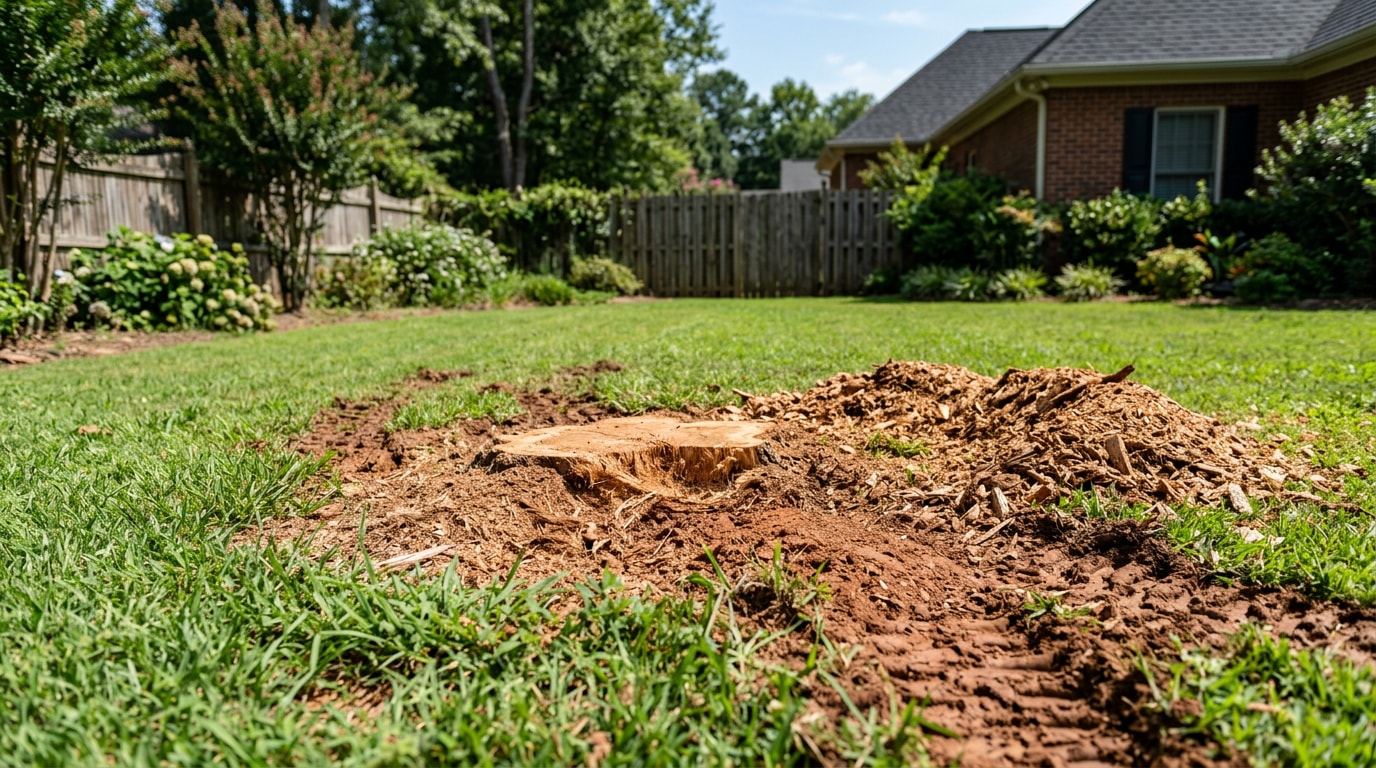
If stump removal is part of the job, it's worth understanding the difference between pulling and grinding before you agree to either — our guide on tree puller options in Mauldin breaks down which method fits which situation.
What Drives the Cost of Safe Tree Removal
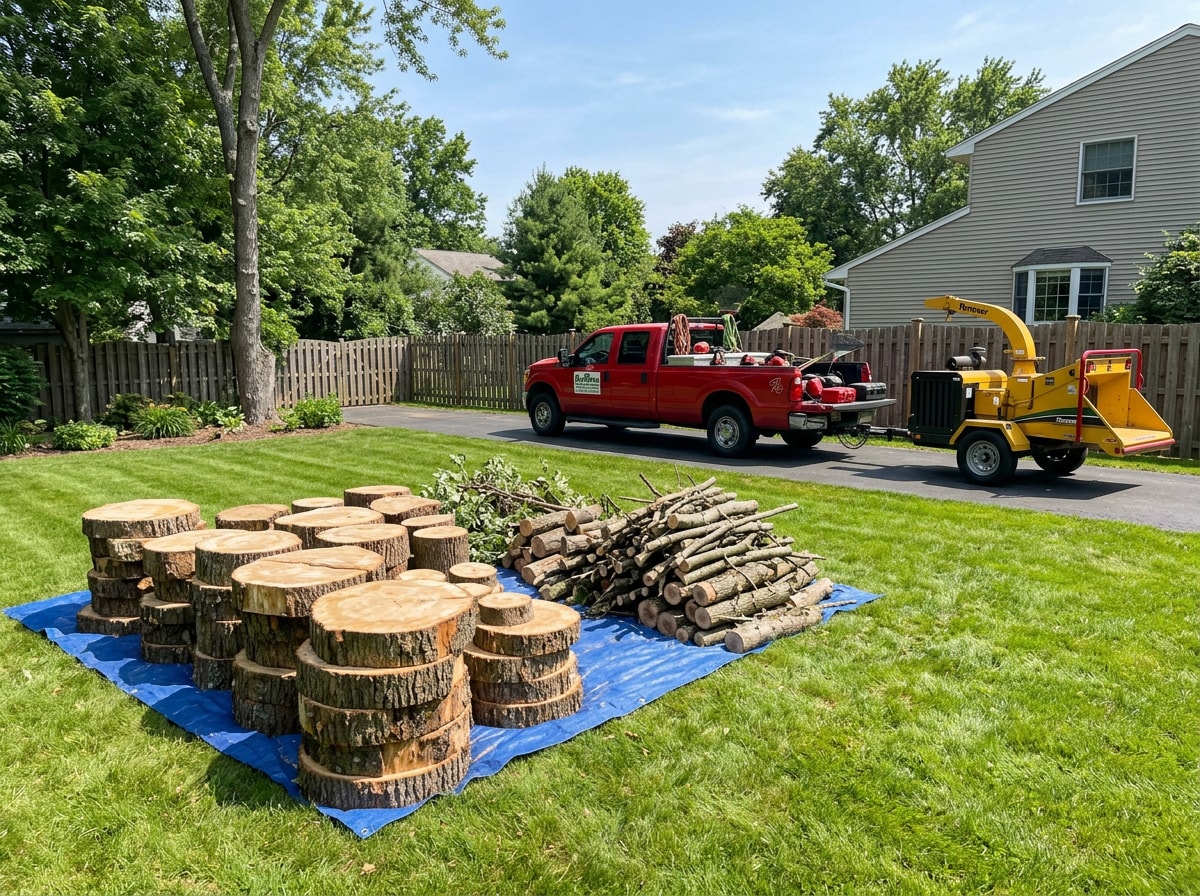
No two removals price out the same way, because size is only one variable. A dead tree standing alone in an open yard is a straightforward job. A leaning tree tangled in power lines eight feet from a roofline is not, even if the trunks are similar in diameter.
The factors that move the price most:
- Access — can equipment reach the tree directly, or does it need to come in by hand?
- Proximity to structures or lines — tighter margins mean slower, more deliberate cuts.
- Condition — a rotted or hollow trunk behaves unpredictably and takes longer to read.
- Debris volume — hauling a full canopy away costs more than leaving chips on-site.
That relationship between cost and care isn't a coincidence. Jobs that need rigging, sectional cuts, or extra crew near a structure take longer and cost more, but that extra time is exactly what keeps the job from becoming a liability. Get a Free Estimate for pricing specific to your tree and your property.
If you're weighing removal against stump grinding or want the whole yard cleaned up at once, our stump grinding and storm debris cleanup pages cover what typically gets bundled into that kind of project. You can also see our full service area, including Mauldin, SC, from the Green Canopy Tree Service homepage.
FAQ
Is it safe to remove a tree yourself?
Rarely, without training. The biggest risks are misjudging the fall direction, cutting too close to a structure or power line, and hitting buried utilities you can't see. Even a small tree can cause serious injury if the lean, wind, or internal decay isn't read correctly before the first cut.
Do I need a permit for tree removal in Mauldin, SC?
Usually not for a routine removal on private residential property. Permits are more likely required for trees in the public right-of-way, protected or heritage species, or those tied to a development or landscaping plan. Call Mauldin's planning office to confirm before scheduling work.
How does the tree removal process work?
Most jobs start with an on-site assessment and a written estimate. The crew then uses sectional cutting or directional felling depending on size and surroundings, followed by debris cleanup and stump handling if that's included in the scope.
How much does tree removal cost in Mauldin, SC?
It depends heavily on size, condition, and access rather than a flat rate. A dead tree in an open yard costs far less than a leaning tree tangled near power lines close to a roofline, since the second job needs slower, more careful rigging.
Who's responsible if a tree falls on my neighbor's property?
As a general rule, a healthy tree that falls in a storm is treated as nobody's fault, and each owner claims the damage through their own insurance. If the tree was already dead or visibly hazardous and the owner knew it, responsibility can shift. Check with your insurer for how your specific policy handles it.
About Green Canopy Tree Service
Green Canopy Tree Service works on residential and commercial properties throughout Mauldin and the surrounding Upstate, handling everything from routine pruning to full hazardous-tree removal. Our crews plan every job around the same priority: protecting what's nearby before the first cut is made. For a safety-first assessment of your tree, contact our team.