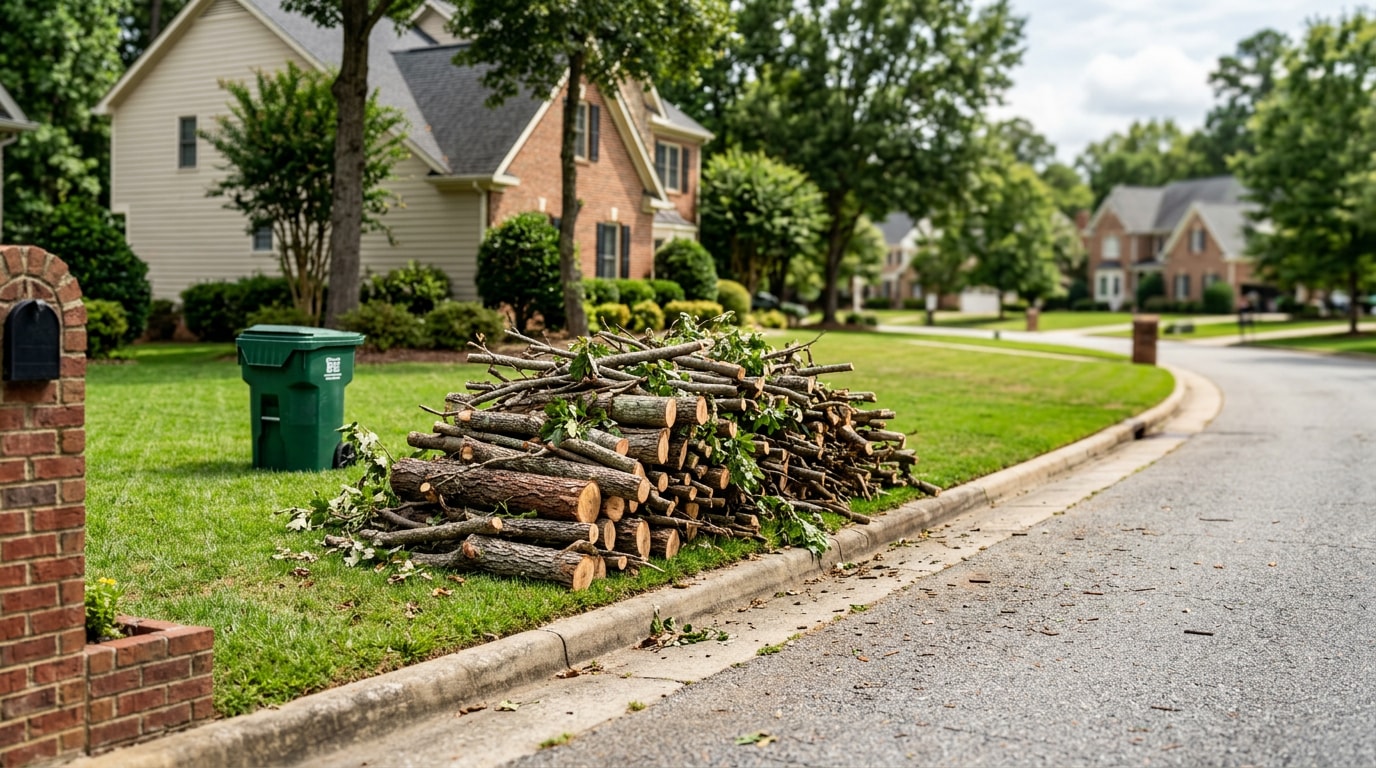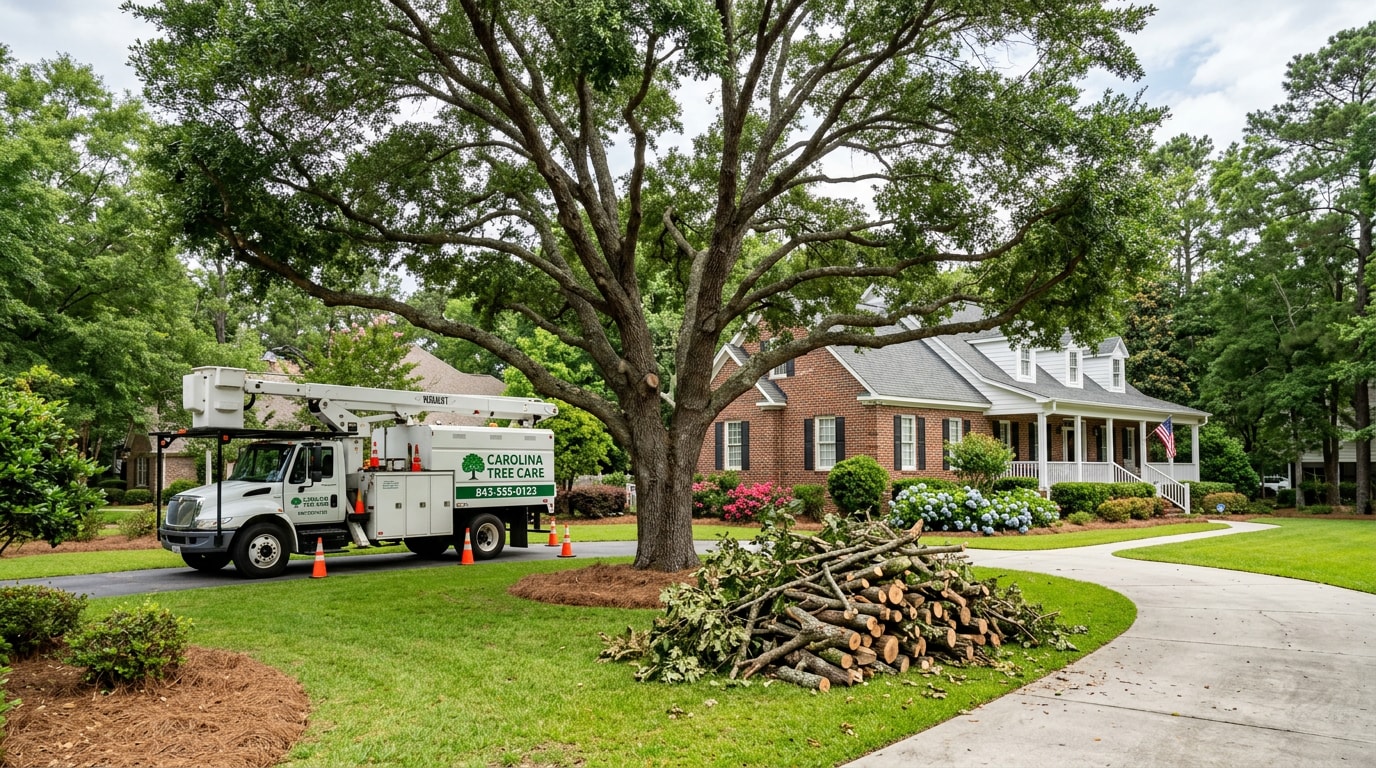
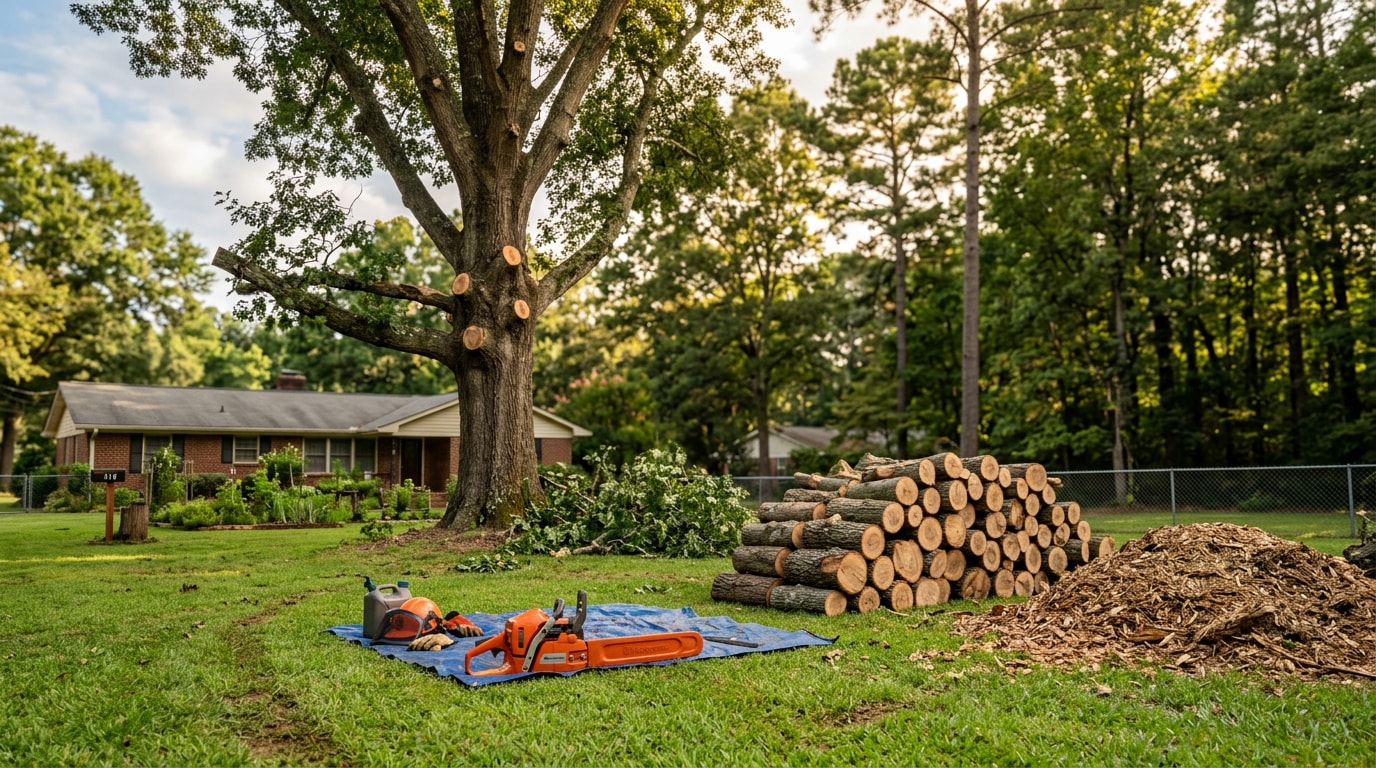
Tree repair in Greenwood, SC gets urgent fast once a storm splits a limb over your driveway or leans an oak toward your roof. The real question isn't whether to call someone, it's whether that tree can be saved or needs to come down before gravity finishes the job. Here's how to read the damage, what a proper storm response looks like, and what your insurance will actually pay for.
Repair or Remove? How to Read Storm Damage
Not every storm-bent tree needs to come down. The call usually comes down to how much structure is left and where the roots stand.
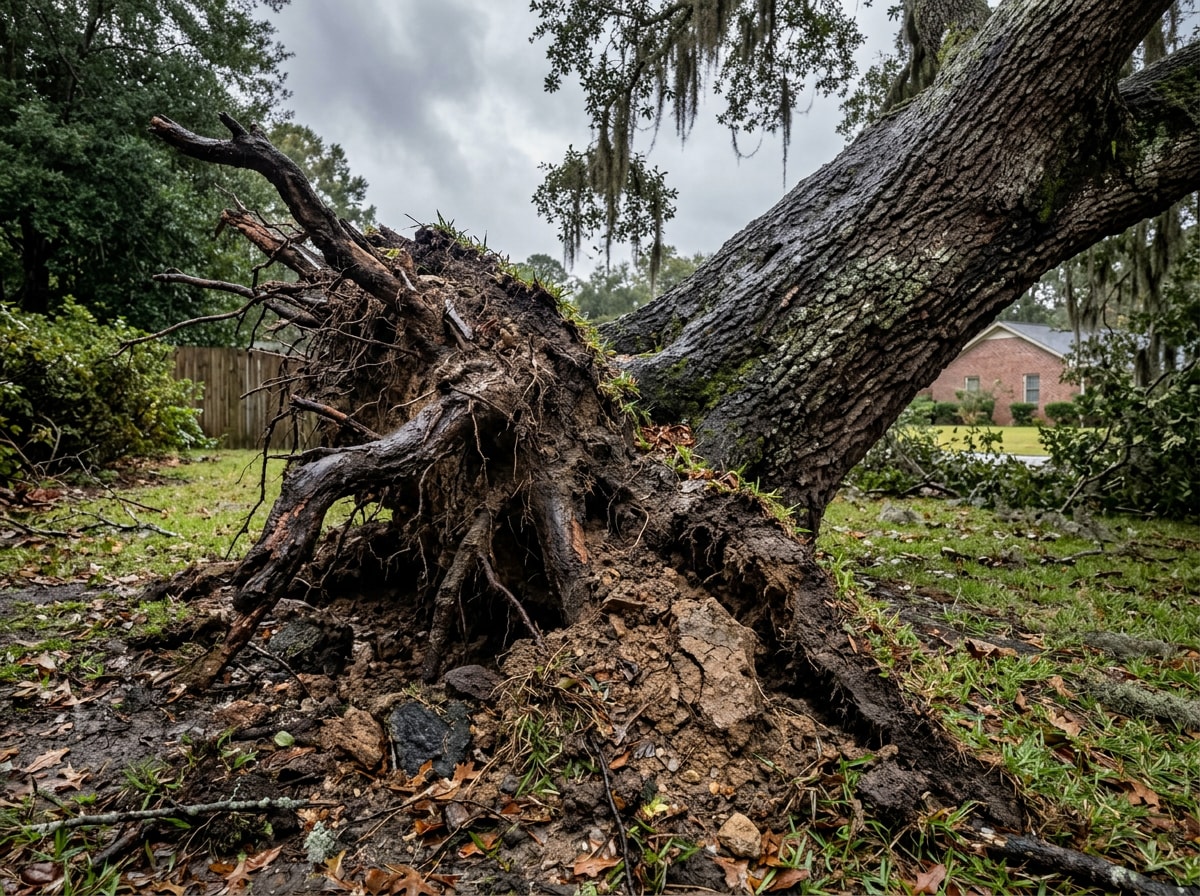
A large uprooted tree should be removed, though smaller trees with intact root systems may be worth saving . Exposed roots need to go back in the ground quickly, and the tree should be braced for support until it reestablishes itself .
Likely a repair candidate if:
- Canopy loss is under half the tree, with the main trunk and scaffold limbs intact
- The lean came from shallow root-plate lifting, not widespread root tear-out
- Breaks are clean enough to prune back to healthy wood
Likely needs removal if:
- The main trunk is split or cracked
- The root plate is fully torn from the soil
- The tree is leaning hard toward a structure, driveway, or power line
Broken limbs should be pruned immediately using proper technique rather than left ragged, since open wounds invite decay and pests long after the storm passes.
Tree Repair vs. Tree Removal: What Each Covers
Tree repair handles cracked limbs, split branches, and surface damage a tree can recover from with professional tree trimming. Tree removal applies once a tree is uprooted, hollow, or too compromised to safely prune back.
That's where tree removal and dead tree removal crews take over, especially for trees already showing decay before the storm hit.
Greenwood and the Upstate see a predictable storm pattern every year: spring and summer thunderstorms, occasional severe wind events, and the tail end of tropical systems moving inland. Storm-related tree repair is a recurring reality here, not a once-a-decade event. For year-round property details, see our Greenwood, SC service area page.
How a Proper Storm Response Works
Hazard assessment comes first, cutting comes second. Every time. This isn't just caution talk, either, it's backed by inspection data.
Across the storm-response tree sites OSHA has inspected, PPE issues showed up at over half of them, and when aerial lifts were in use, fall protection was missing or used incorrectly at roughly three out of four sites . That's the gap a disciplined crew is built to close before a single branch gets cut.
Picture a typical call: an oak leaning against a fence after a thunderstorm. The sequence looks like this:
- Confirm whether the trunk is still rooted and whether weight is bearing on a fence or structure
- Rule out contact with energized power lines before anyone touches a saw
- Clear hazardous hanging limbs first
- Cut and section the tree itself
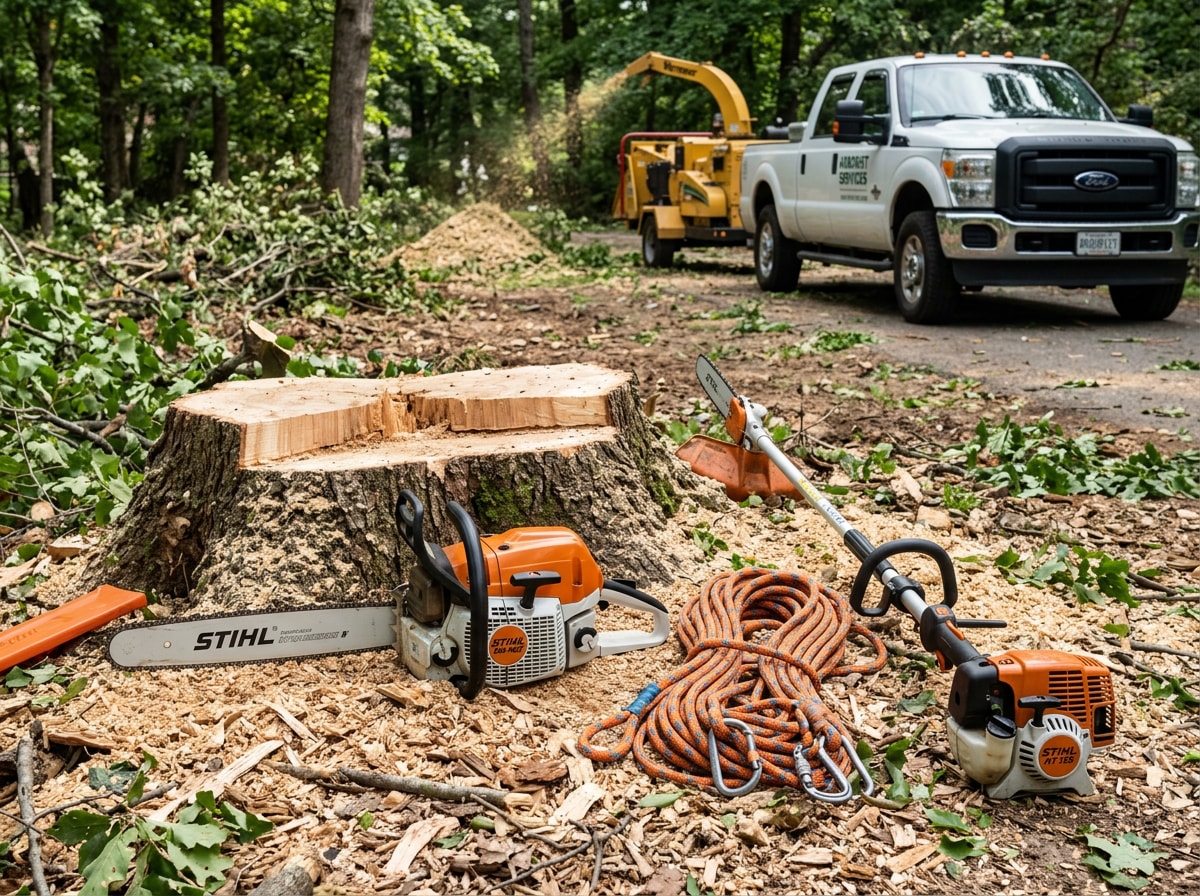
- Haul debris and grind the stump through our storm debris cleanup and fallen tree removal crews
This sequence mirrors the general hazard-assessment approach OSHA's hurricane response matrix recommends for crews working downed and damaged trees .
Does Homeowners Insurance Cover Storm Tree Damage in Greenwood, SC?
This is the question that comes up on almost every storm call, and the answer depends entirely on where the tree landed.
If a tree hits your home or another insured structure, a standard homeowners policy typically covers the damage to the structure and its contents, including trees felled by wind, lightning, or hail . Removal costs for a tree that hit a structure are usually covered too, generally capped around $500 to $1,000 depending on the policy .
If the tree fell without hitting anything, there's usually no coverage for debris removal, though some insurers will pay if the tree is blocking a driveway or an accessibility ramp .
| Scenario | Typically covered? |
|---|---|
| Tree hits house, garage, or fence (wind, lightning, hail) | Yes, repair and removal, up to policy limits |
| Tree falls in the yard, no structure hit | Usually not, unless it blocks a driveway or ramp |
| Tree was visibly dead or rotting before the storm | Often denied as a maintenance issue |
| Neighbor's tree falls on your property | Your policy responds first; your insurer may seek reimbursement from theirs |
A free storm damage assessment gets you dated photos, a written damage report, and an itemized estimate, exactly what most adjusters ask for before they'll move a claim forward.
Why Greenwood, SC Homeowners Call Green Canopy Tree Co
Storms don't check business hours, so 24/7 availability matters when a limb is already resting on your roof. I've answered enough of those calls across Greenwood County to know the first ten minutes on-site matter more than the next ten hours, says our lead ISA Certified Arborist. Checking root stability and line contact before anyone starts a saw is what keeps a bad day from becoming a worse one.
Beyond speed, an insured crew should document the job for your claim and leave the property genuinely clean, not just cleared. Our teams handle everything from emergency tree removal to routine tree service work, so the plan doesn't stop at the dangerous tree, preventive pruning on the rest of the yard reduces the odds of a repeat call next storm season.
Request Your Free Storm Damage Assessment
A free storm damage assessment is a no-cost, no-obligation visit. An arborist walks every affected tree, builds a prioritized plan if several trees are down, and hands you a written estimate you can forward straight to your insurer.
Ready to get a tree inspection scheduled? Request a free estimate and a crew member will follow up promptly. You can also browse the full range of services on our homepage.
Serving Greenwood and the Surrounding Upstate
Storm patterns don't stop at the Greenwood city limits, and neither do we. Crews regularly cover Fountain Inn, Laurens, Woodruff, Simpsonville, and Mauldin for the same storm response and year-round tree care.
If storm stress has also left trees vulnerable to pests, our guide on tree spraying in Woodruff, SC covers what to watch for afterward.
FAQ
Can a storm-damaged tree be saved, or does it need to come down?
It depends on root and trunk condition. A tree with under 50% canopy loss, an intact root plate, and clean breaks is often a repair candidate. A split trunk, torn-out roots, or a heavy lean toward a structure usually means removal is safer.
Does homeowners insurance cover storm damage tree removal in Greenwood, SC?
Usually, yes, if the tree hit a covered structure during a covered peril like wind or lightning. If the tree fell in the open yard without hitting anything, removal coverage is less likely. Check your specific policy's debris-removal clause.
What should I do immediately after a tree falls on my property?
Keep people and pets away from the tree and any wires. Don't move limbs that could be touching a line, and don't cut anything yourself if the tree is still under tension. Call a professional crew to assess hazards before any cutting starts.
Can you help when multiple trees are down across my property?
Yes. Large-scale storm cleanup involving several downed trees is common after severe Upstate weather, and crews scale up equipment and labor as needed. Removal is prioritized by immediate safety risk, the most dangerous trees first, regardless of total job size.
How much does storm damage tree repair cost?
Pricing varies by tree size, accessibility, whether the work is emergency or scheduled, and total debris volume. Confirm current local pricing directly with a provider, since costs shift with storm severity and regional demand.