Tree and shrub pruning in Simpsonville, SC keeps your landscape safe, healthy, and ready for the Upstate's swings between humid summers and ice-prone winters. Cut at the wrong time or with the wrong technique, pruning can set a tree back years or open the door to disease. Here's exactly when, how, and why to cut, plus what a professional crew does differently than a weekend DIY job.
Best Time to Prune Trees and Shrubs in Simpsonville
Timing matters as much as technique, and it changes by plant.
Clemson Extension's Upstate regional guidance gives a simple rule of thumb for February pruning decisions: prune ornamental trees and shrubs that bloom after May 1, along with fruit trees, shrubs, and vines that produce fruit on current-season growth . Everything that blooms before May 1, such as azalea, forsythia, and camellia, should wait until after flowering.
Here's how that plays out for the plants we see most often around Simpsonville yards:
| Plant | Best Time to Prune | Why |
|---|---|---|
| Crape myrtle | Late winter (Jan-Feb) | Before new growth starts; avoid over-cutting ("crape murder") |
| Azalea | Right after spring bloom | Prevents cutting off next year's flower buds |
| Hydrangea (bigleaf) | After bloom (summer) | Blooms form on old wood |
| Hydrangea (panicle) | Late winter | Blooms form on new wood |
| Southern red oak | Dormant season (Nov-Mar) | Lowers oak wilt transmission risk |
| Boxwood & evergreen shrubs | Late winter, before flush | Shapes growth before spring push |
Southern red oaks, common throughout Simpsonville's older neighborhoods, are safest to prune during the dormant season specifically to limit disease risk. Get the timing wrong on a flowering shrub and you'll usually just lose that season's blooms. Get it wrong on an oak during active growing season, and you've raised the odds of a real problem.
Tree and Shrub Pruning Services We Offer
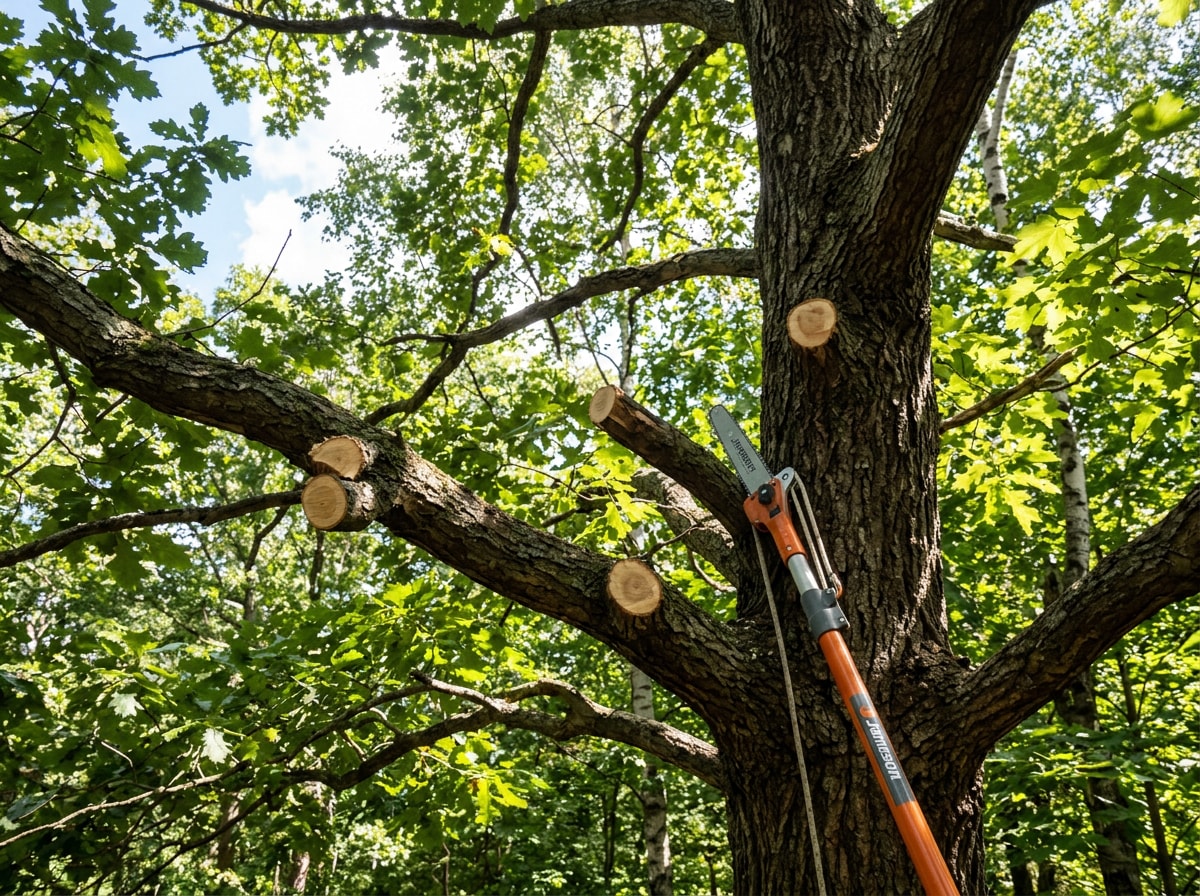
Pruning removes dead, diseased, or overgrown branches to improve structure, encourage healthy growth, and reduce safety hazards. The right technique depends on the plant and the goal:
- Crown thinning — selectively removes branches to improve light and airflow through the canopy
- Crown raising — removes lower limbs for clearance over driveways, walkways, or structures
- Structural pruning — trains young trees toward a strong branch framework before storms test it
- Rejuvenation pruning — cuts overgrown shrubs back hard to restore shape and vigor
See the full range of options on our tree service page, or go straight to tree trimming if that's what your yard needs.
Why Simpsonville's New Subdivisions Need a Different Pruning Plan
Simpsonville's rapid subdivision growth means a lot of young trees, red maples and crape myrtles especially, are planted in graded, compacted clay with poorly established root systems. That disturbed ground needs a different pruning approach than a mature canopy tree with a settled root zone.
Clemson Extension's tree maintenance guidance is specific about the window that matters most: pruning is not necessary for the first year after planting, but structural pruning should be done every 2 to 3 years, beginning in the second season and ending in the tenth year after planting, to establish a strong, sturdy central leader with well-spaced branches 12 to 18 inches apart . Trees pruned correctly during that window need far less corrective work later.
In our own site visits across Simpsonville's newer developments, the compacted subsoil under fresh sod is almost always the first thing we check, since it changes how aggressively we can prune a young tree without stressing roots that haven't fully established yet. A local arborist who knows this soil pattern adjusts cuts and timing accordingly, rather than pruning a five-year-old maple the same way as a sixty-year-old oak.
If you'd rather talk through your specific trees than guess at a schedule, our Simpsonville service-area page has more on what we see locally, or you can request a free estimate directly.
Tree and Soil Health Evaluations
Pruning isn't just cosmetic, it's a window into overall plant health. A thorough evaluation checks the canopy for dead wood and sparse growth, and examines the root zone for compaction or drainage problems.
Early stress signs are easy to miss if you're not looking for them. Penn State Extension notes that under water stress a tree shifts from growth mode into survival mode, shedding leaves starting from the outermost branches first . That outer-canopy thinning is often the first visible clue, well before a tree looks obviously sick.
Catching that early means addressing a drainage issue or a girdling root before it becomes a dead or hazardous tree. If a tree is already past the point of pruning or treatment, our dead tree removal and stump grinding services handle the next step.
Our Pruning Process
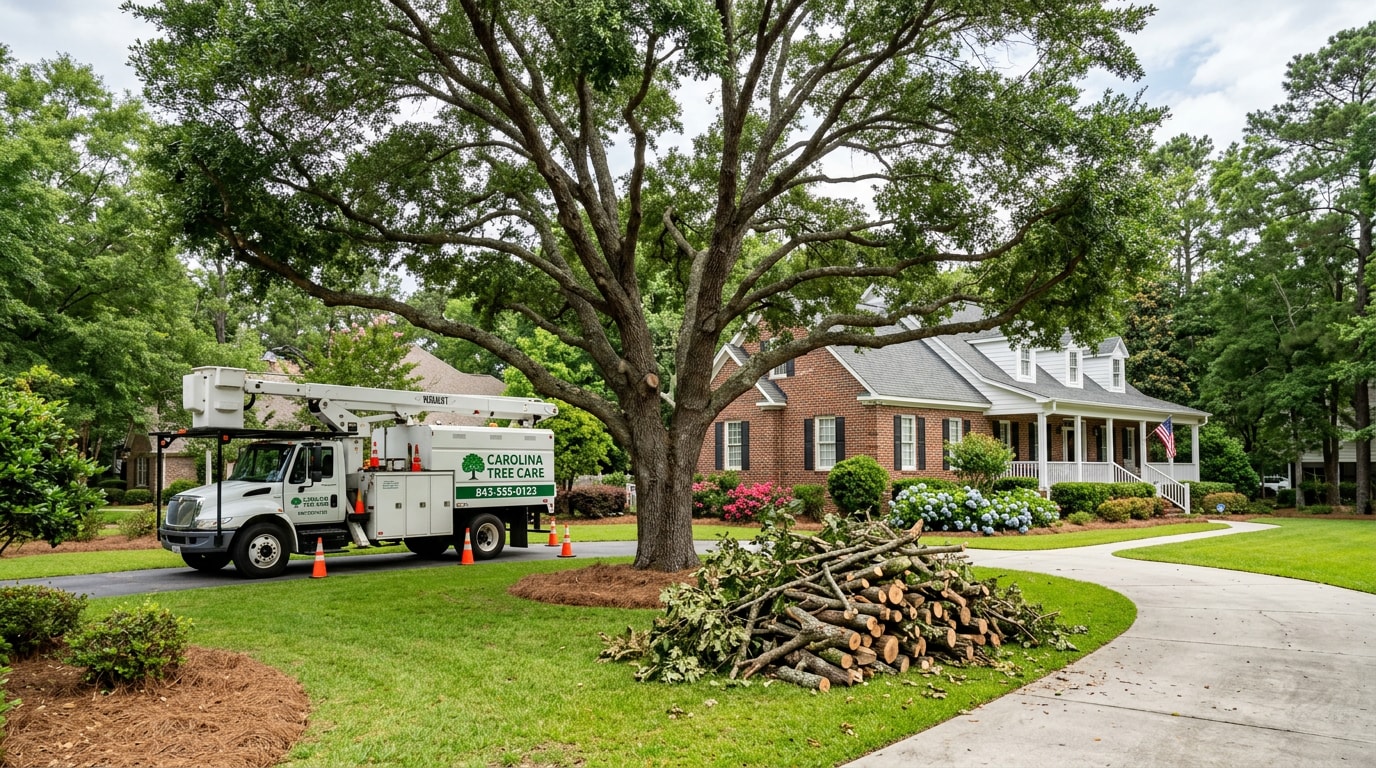
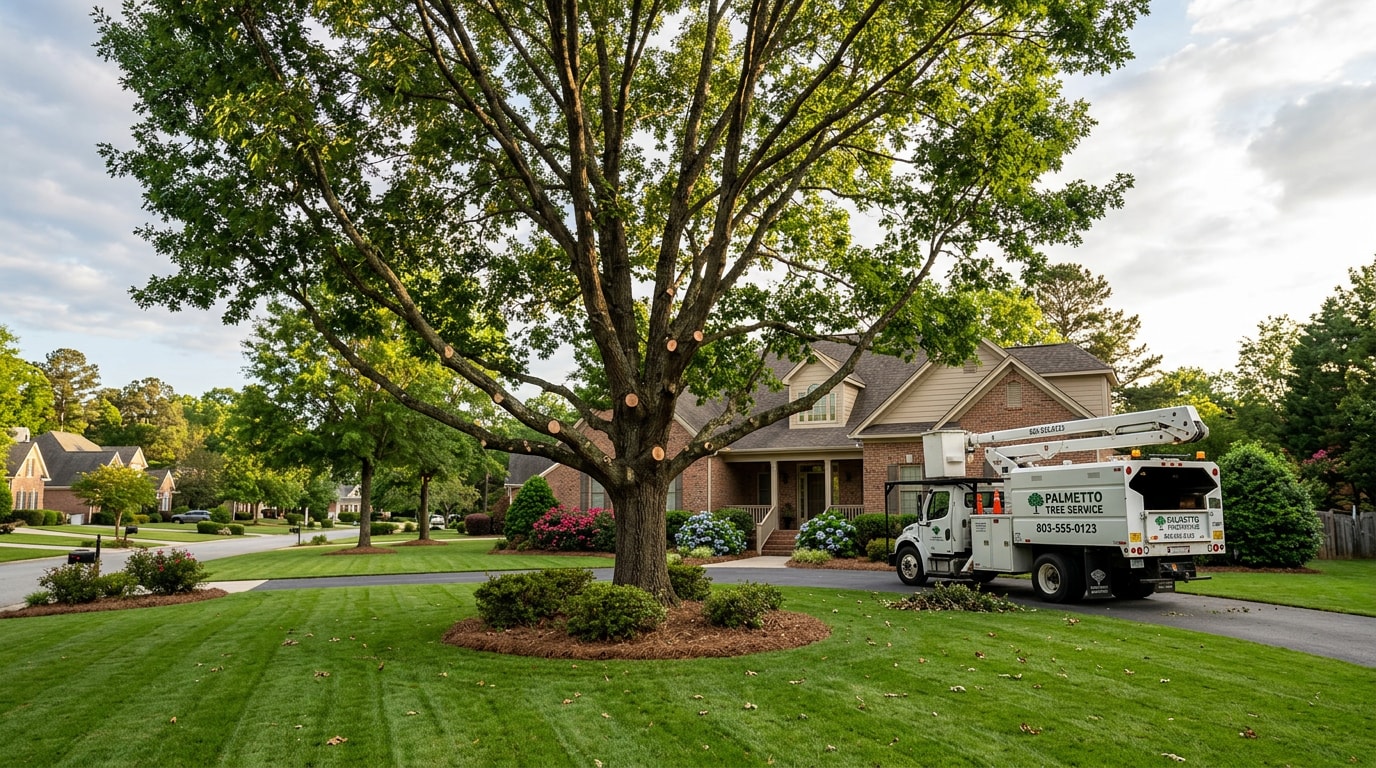
Most jobs start with a walk-through and a free estimate, so you know the scope and cost before any cutting begins. From there, a crew arrives with the right equipment for the job, pole saws for smaller branch work, bucket trucks for taller canopy pruning.
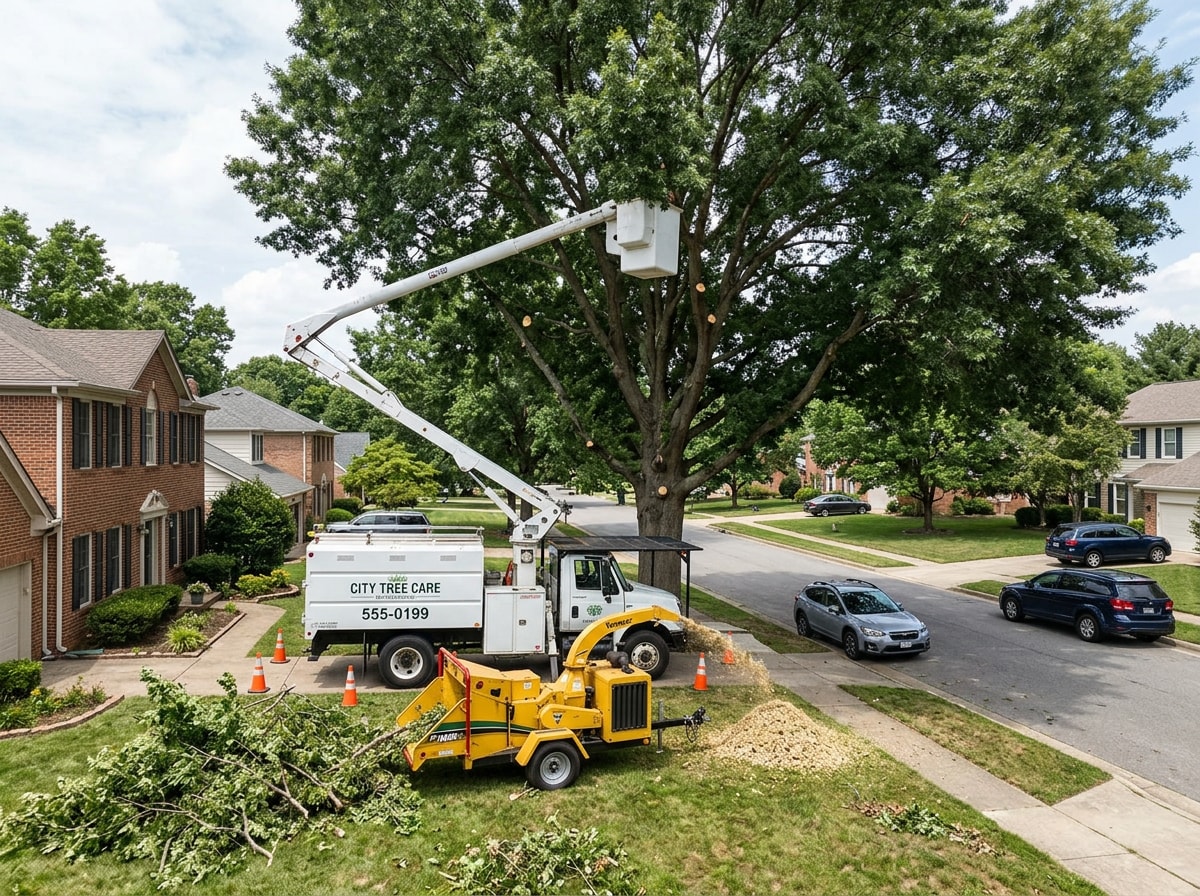
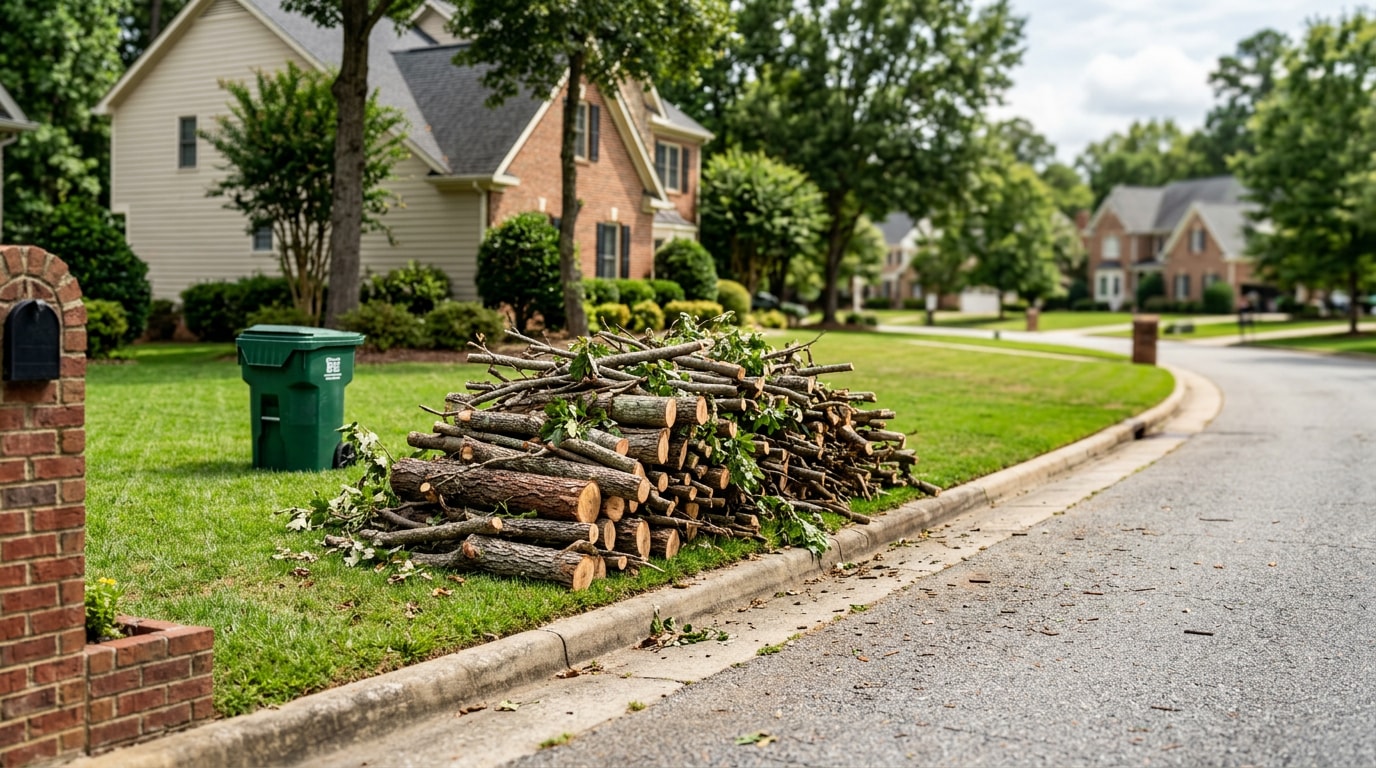
Crews work methodically and clear debris as they go rather than leaving cleanup for later. Expect a raked, finished yard when the job wraps, not a pile of branches by the curb. If storm damage or heavy brush is part of the job, our tree debris removal and brush removal crews handle that in the same visit.
The International Society of Arboriculture recommends consulting a local arborist about alternatives before resorting to drastic cuts like topping , which matches how we approach every job: prune what the tree needs, not the most that can be cut in one visit.
Ready to get started? Request your free estimate, or visit our homepage to see our full service lineup.
Areas We Also Serve Near Simpsonville
Beyond Simpsonville, we handle tree and shrub pruning throughout the Upstate, including Fountain Inn, Mauldin, Laurens, Woodruff, and Greenwood.
FAQ
How often should trees and shrubs be pruned?
Most shade trees need pruning every three to five years once mature. Young trees are different: structural pruning every 2 to 3 years for the first decade after planting builds a stronger branch framework than waiting. Flowering shrubs often benefit from light annual maintenance instead of a fixed cycle.
What's the difference between tree trimming and tree pruning?
Trimming usually means shaping growth for appearance, like keeping shrubs or hedges neat. Pruning is more targeted: removing specific dead, diseased, or structurally weak branches for the health and safety of the plant. In practice, most professional visits do both at once.
When is the best time to prune trees and shrubs in South Carolina?
Most deciduous trees and shrubs that bloom after May 1 prune best in late winter, before new growth starts. Spring-blooming shrubs like azalea and forsythia should wait until just after their bloom cycle ends.
What happens if you prune at the wrong time of year?
Usually you lose that season's blooms or fruit rather than causing lasting damage. The exception is Southern red oak, where pruning during the active growing season raises the risk of attracting beetles that spread oak wilt.
Does regular pruning prevent tree and shrub problems?
Yes. Routine pruning helps catch disease and pest issues early and reduces the odds of an emergency removal later, protecting both the tree and your property.
How much does tree and shrub pruning cost in Simpsonville, SC?
Cost depends on tree size, number of plants, and access, so there's no single flat rate that applies everywhere. The fastest way to get an accurate number is a free, no-obligation estimate for your specific yard.